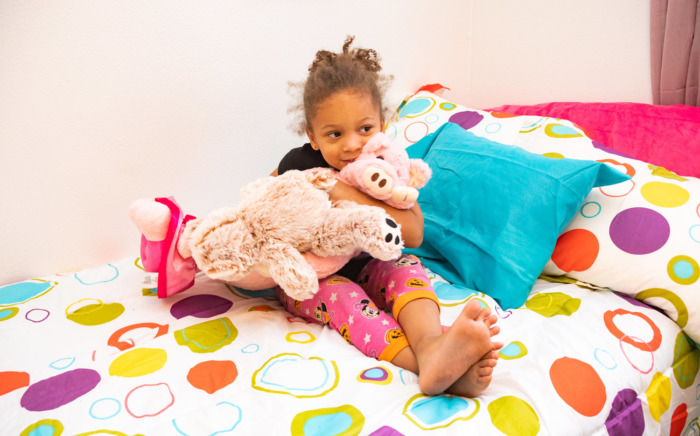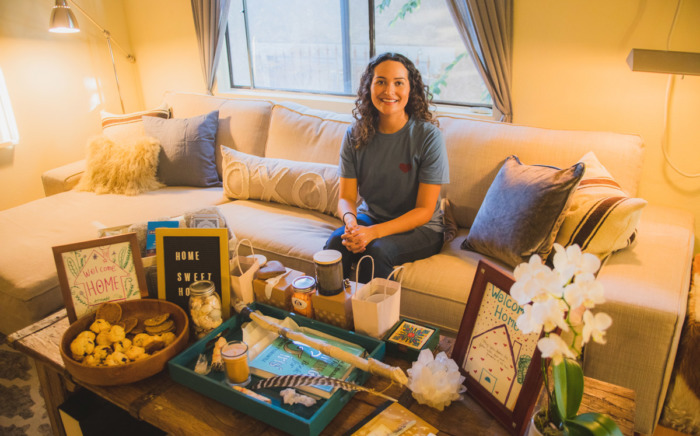

Empirical evidence has found that a tenancy will fail if an occupant cannot turn their dwelling into a fully functioning home. It requires hundreds of items that form a kind tool kit for life – the ability to build a healthy and productive life. On the low end it costs $12,000 to fully equip a one bedroom apartment to make the space a functional home. That doesn’t include appliances nor the cost and time it takes to procure every single item, transport it and assemble it.
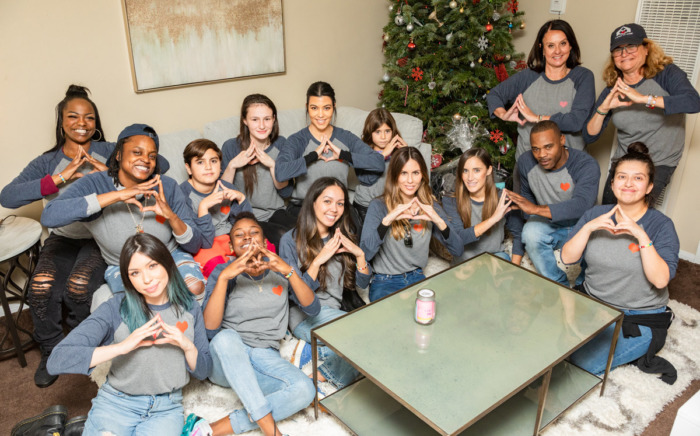
Our ASOH model efficiently upcycles perfectly wonderful items, no longer needed by the original owner, and thanks to the loving acts of volunteers, these items form a curated and lovingly designed home that prevents someone from becoming homeless. From sorting and organizing and building furniture in our warehouse, to selecting all items for a Home Creation, to the volunteer team who unloads, installs and creates the home — the entire life cycle of the ASOH model is supported by our volunteers.
Our evidence-based model, supported by our own proprietary software systems, is designed to create an intentional, healing home environment, uniquely curated for each inpidual and family. The volunteer powered model unites the community, turning the act of furnishing a home into a collective healing experience.The Mayo Clinic states that volunteering is the most powerful non-pharmacological approach to improving mental health, combating loneliness, and fostering a sense of purpose.We find that to not only be true but infectious. When we gather with our community of volunteers to implement an important solution, we bear witness to our inextricable human connection as one and feel uplifted by their positivity, kindness, and generosity.
One of the most important aspects of our model is inviting recipients to pay it forward and become a volunteer themself. One of the very first recipients to pay it forward, Yolanda became our first employee. We saw how this initial opportunity to volunteer organically connected Yolanda, in those very early days, to a community of volunteers who became her long-term friends and mentors. We observed that the young people we were serving not only needed a sense of home but also a sense of community. We also discovered that the act of paying-it-forward also provides the important opportunity of “meaning-making”. Meaning-making in clinical psychology is the active, subjective process through which inpiduals construe, understand, and interpret life events, relationships, and their self to create a sense of coherence, purpose, and significance. It is crucial for coping with trauma, loss, and adversity, helping inpiduals adjust their worldview to integrate difficult experiences. 120 Pay It Forward Ambassadors volunteer annually. And thanks to our volunteers they become more deeply connected to the community.
One in three Americans live in furniture poverty. 100% of young people aging out of foster care are immediately confronted with furniture poverty. The issue of furniture poverty is increasingly recognized as a significant barrier to housing stability, affecting twice as many people as food insecurity. This recent Forbes article captures the crisis. Public housing programs and social services for vulnerable populations routinely cover rent, and wraparound services, but furniture is never included. The newly introduced Housing to Homes Act of 2025 (H.R.6477) aims to amend the McKinney-Vento Homeless Assistance Act to allow federal Continuum of Care (CoC) program funding to be used for furniture . A national campaign to end furniture poverty in the UK found that furnished tenancies reported a 50% reduction in tenant turnover which led the government to promote this evidence-based method for reducing “tenancy churn” (the rate at which tenants move out). Saving landlords $5,000 per turnover event.
Thanks to the commitment of our volunteers we are working to end furniture poverty and create brighter futures for former foster youth. 94% inpiduals served at ASOH remaining stably housed after 1 year. This Volunteer Appreciation Month we salute the efforts of our volunteers. Without our volunteers, A Sense of Home would not exist.